President Trump has defined his career in politics with displays of dominance and control. But in the Middle East, he faces a rolling crisis that keeps thwarting those impulses.
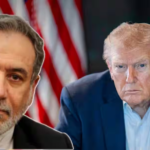
On Sunday, Mr. Trump lashed out at Prime Minister Benjamin Netanyahu, telling The Financial Times that the Israeli leader “won’t have any choice” but to accept a U.S.-negotiated deal with Iran. “I call all the shots,” he said. But early Monday, Mr. Trump was still trying to rein in Mr. Netanyahu, writing on social media just after 5:30 a.m.: “Israel and Iran must immediately stop ‘shooting.’”
One hundred days after starting the U.S.-Israeli war on Iran on Feb. 28, Mr. Trump is grappling with his own version of the sort of Middle East military quagmire that beset his predecessors — and that he promised to avoid. (On Sunday, Mr. Trump tried to deny that he had ever made such a pledge, telling NBC News that “I don’t like these endless wars” but also that “this is not an endless war.”)
He won a tactical reprieve on Monday when Iran and Israel both said they would hold their fire after their first strikes on each other since April. But the fundamental deadlock remains, as Iran hawks in Washington warn that the president faces a strategic defeat and as polls show broad disapproval of the war as the midterms approach.

“Trump launched a war of choice overestimating America’s military capacity and underestimating Iran’s,” said Aaron David Miller, a former State Department official who is a senior fellow at the Carnegie Endowment for International Peace. “That is a box that Trump cannot get out of right now.”
That box includes Iran’s de facto closure of the Strait of Hormuz, which the U.S. counter-blockade on Iranian ships has been unable to resolve. There is also Mr. Trump’s demand for wide-ranging concessions by Iran on its nuclear program, which Tehran is resisting.
“I worry that the president’s going to codify a bad deal,” said Brad Bowman, a former U.S. Army officer and senior military expert at the Foundation for Defense of Democracies, a Washington think tank that takes a hawkish line on Iran.
Mr. Trump has let his frustration show. He complained on social media last week that critics were “chirping” that he should “move faster, or move slower, or go to war, or not go to war, or whatever.” He said they should “sit back and relax” because “it will all work out well in the end — It always does!”
On Sunday, Mr. Trump insisted that he had not violated his campaign pledge to avoid “endless wars” even though a conflict he called “a little excursion” in March had entered its fourth month.
“Look at Iraq. You were there for years,” Mr. Trump said in an interview with Kristen Welker of NBC’s “Meet the Press.” “We’re there for a few months. And the threat is largely over. Soon, it will be over.”
But unlike Iraq, where U.S. ground forces toppled Saddam Hussein’s government within weeks before eventually getting bogged down in a yearslong insurgency, the Iran war has stood out for how quickly it has revealed the limits of what American firepower can accomplish. Mr. Bowman said that if the war left the Iranian leadership “angry and still armed,” with newfound influence over the Strait of Hormuz, “then I’d say that is a negative outcome for the United States.”
“The United States has demonstrated that it has the pre-eminent military in the world, but that that military power also has limitations,” Mr. Bowman said. “I do worry that this administration underestimated the Islamic Republic of Iran.”
Mr. Bowman said that a sharp escalation of the war by the United States would also be problematic, and that the depletion of U.S. munitions stocks had harmed America’s military posture in Europe and Asia. But he acknowledged that his preferred route of heightening the economic and political pressure on Iran would be difficult to maintain for Mr. Trump, given Iran’s ability to keep gasoline prices high with its grip on the strait.
Deepening Mr. Trump’s struggle to control the course of the war is his mercurial relationship with Mr. Netanyahu, who has angered the U.S. president with fierce strikes in Lebanon in his fight against Hezbollah, the Iran-aligned militant group there. Mr. Trump acknowledged last week that he had held a profanity-laced call with Mr. Netanyahu, explaining that “I was a little bit perturbed at his constantly fighting with Lebanon.”
Mr. Miller, who specialized in the Middle East at the State Department, described Mr. Trump as largely successful in establishing leverage over Mr. Netanyahu. The perceived support of Mr. Trump is critical to Mr. Netanyahu’s political survival in Israel, Mr. Miller said. Mr. Trump could well bring more pressure to bear on Mr. Netanyahu if it is necessary to secure an agreement with Iran, he predicted.
But getting to that stage would require extracting more compromises from Iran. While Mr. Trump has shown he can change Israel’s calculus, Mr. Miller said, “he’s not yet demonstrated that he can change Tehran’s. That is his big problem.”
