President Trump and senior Pentagon officials sought to solve the country’s munitions shortage by approaching the problem from two directions in meetings this week.

They urged defense companies to speed up production of depleted weapons systems. And they pushed lawmakers to approve additional money to pay for the war against Iran, which helped to deplete munitions.
It is likely to be an uphill battle.
In a meeting at the White House on Wednesday, defense companies told Mr. Trump that they wanted more money to fund expanding production, according to two officials with knowledge of the meeting.

Mr. Trump, one of the officials said, was more conciliatory than he has been in past meetings with the companies and told them that his administration was working to secure more funding. But his request for $70 billion to pay for the war is expected to face stiff opposition in Congress. The proposal needs bipartisan support in the Senate to advance, and nearly all Democrats have said they will not vote to fund a conflict they oppose.
At stake for the Pentagon is not necessarily its ability to continue the fight against Iran. Officials from the military’s Central Command insisted in interviews this week that they have everything they need should the president decide to restart hostilities. But the Pentagon’s ability to prosecute future wars — particularly a so-called great-power war against China, for instance — could be hobbled by a munitions shortage that might take years to reverse.
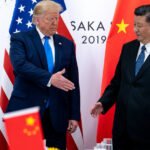
“The United States has enough munitions for any plausible scenario in the Iran war, but the depleted inventories have created a window of vulnerability for a potential Western Pacific conflict,” the Center for Strategic and International Studies said last month. “The time needed to rebuild those inventories has thus become a major concern.”
Adding to the Pentagon’s challenges is that some lawmakers in both parties are wary of the agreement that Mr. Trump struck with Iran to end the war and were mad that the president and the defense secretary started the war in the first place.
“For months, the administration has failed to answer basic questions about its aims and justification for the Iran war and failed to provide the most basic information about its costs,” said Senator Patty Murray of Washington, the top Democrat on the Appropriations Committee.
“This president is telling the American people there’s no money for health care, housing or child care — but there should be endless taxpayer dollars to fund wars they don’t support,” she added.
The Pentagon’s insistence that the military already has everything it needs has further complicated its request for more money.
“In exchange for longer-term orders, defense contractors are now investing their own private capital in new manufacturing plants and assembly lines — putting hundreds of thousands of Americans to work and saving our department tens of billions,” Defense Secretary Pete Hegseth said in an essay posted on Tuesday on the Pentagon’s website.
“Our warfighters will get the weapons, platforms and technology they need ahead of schedule — tomorrow’s weapons today, not yesterday’s weapons tomorrow,” he wrote. “Our newest programs are now ahead of schedule and under budget, and we’ve got legacy programs moving years faster.”
In actuality, the war against Iran drained the Pentagon’s arsenal. The United States burned through around 1,100 long-range stealth cruise missiles built for a war with China, close to the total number remaining in the U.S. stockpile. The military has fired more than 1,000 Tomahawk cruise missiles, roughly 10 times the number it buys each year.
The Pentagon used more than 1,200 Patriot interceptor missiles in the war, at more than $4 million apiece, and more than 1,000 Precision Strike and ATACMS ground-based missiles, leaving inventories worrisomely low, according to internal Defense Department estimates and congressional officials.
To help address the shortages, the Senate Armed Services Committee approved a bill last week that could bar some defense contractors from making stock buybacks or paying dividends to shareholders unless they first get approval from the Pentagon. The measure, if it passes, would be an extension of an executive order Mr. Trump issued in January.
Defense officials have long complained that companies prioritize paying dividends to shareholders over investing in new factories and equipment that can increase weapons production.
At Wednesday’s meeting with the defense manufacturers, Deputy Defense Secretary Steve Feinberg did most of the talking, according to people briefed on the conversations. He echoed Pentagon talking points that the defense companies should be moving faster. But the officials said the meeting was not confrontational, and defense companies said they would work to speed up production.
So far, there have been many announcements about plans to expand production, but little actual production expansion, industry officials say.
On Feb. 4 — weeks before the United States and Israel attacked Iran — Raytheon said it would increase production of Tomahawk missiles to 1,000 per year, up from 90.
But first, Raytheon needed to find additional suppliers of the airframes used in the missile bodies. In August, Raytheon entered a partnership with Divergent, a start-up in Torrance, Calif., that uses industrial 3-D printers to make metal parts.
Last week, Divergent announced that it would open a new production facility where it plans to make airframes for Raytheon next year, along with parts for other customers.
“It’s an all-hands-on-deck moment,” said Lukas Czinger, Divergent’s chief executive.
But the company is still undergoing the arduous process of certifying the Raytheon airframe with several rounds of tests, a task that can take years.
The difficulty of ramping up the production of munitions was a key topic at the Reindustrialize Summit last week in Detroit, as top Trump administration officials rubbed shoulders with manufacturers and Silicon Valley investors intent on rebuilding the U.S. industrial base.
In a keynote address, Tara Murphy Dougherty, the chief executive of Air, a defense software company formerly known as Govini, said the United States was facing “a dangerous chasm between what the warfighter needs and what the national security enterprise can deliver.”
She blamed a number of issues, including fragmented systems and archaic procurement processes, for the long delays in starting new weapons programs and repairing equipment that is already in use.
Pentagon officials have been pushing defense contractors for more than a year to look for nontraditional solutions, including working with the auto industry to leverage its experience in mass production.
Last week, Lockheed Martin and GM Defense, a subsidiary of General Motors that makes military vehicles, announced that they had signed a memorandum of understanding to explore ways to work together to increase the production of munitions, among other things. Frank St. John, Lockheed Martin’s chief operating officer, said teams from the two companies would get together in the coming weeks to “look at what is the manufacturing challenge that we’re facing within the defense industrial base.”
